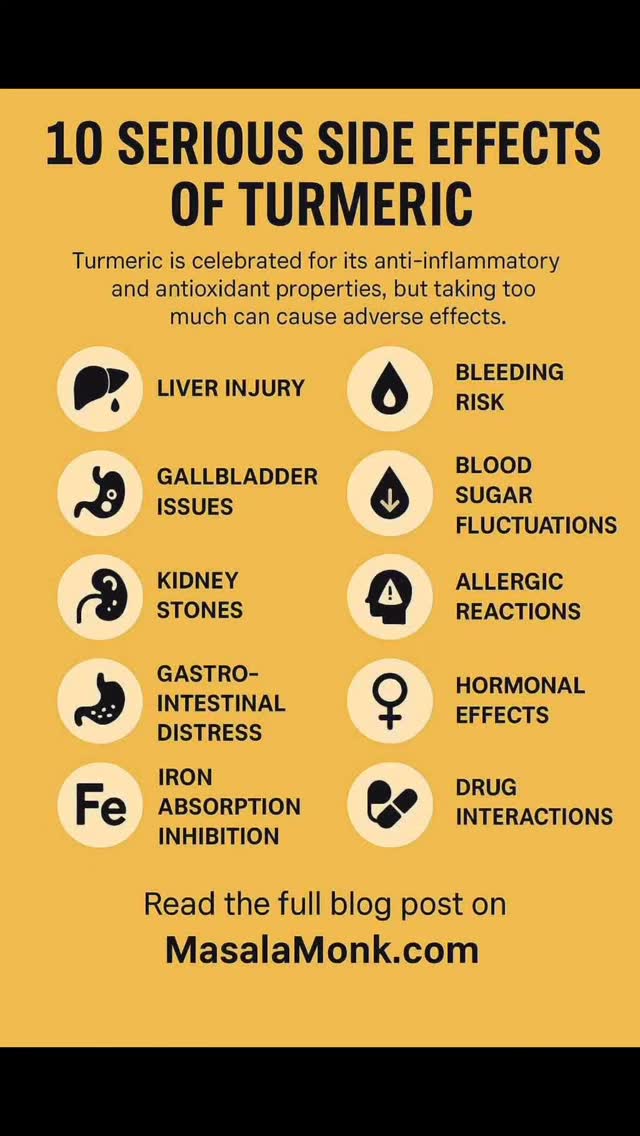
10 serious side effects of turmeric
Our mission is to provide you, the discerning reader, with a thoroughly detailed, scientifically backed article that not only lists the side effects but delves into the underlying mechanisms, risk factors, and necessary precautions. We believe that informed decisionmaking is the cornerstone of good health, and this article is meticulously crafted to empower you with the knowledge you need.
The Misconception of Universal Safety
Why a "Natural" Supplement Is Not Always a "Safe" Supplement
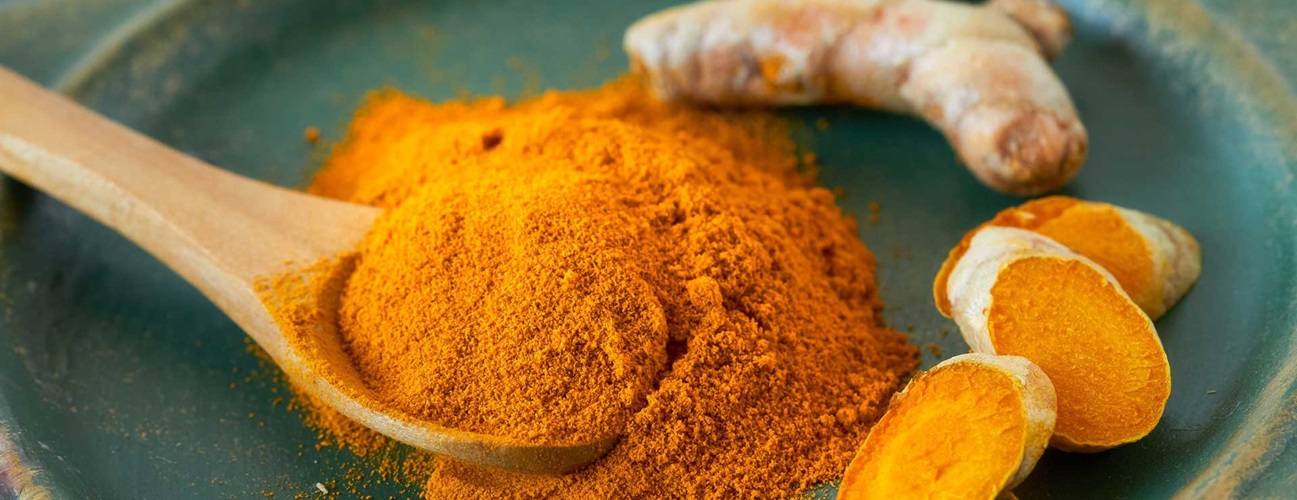
Many people operate under the assumption that because a substance is derived from a natural source, it is inherently safe. This is a dangerous oversimplification. Just as a plant can be a source of lifesaving medicine, it can also be a source of potent toxins. Turmeric, or more specifically, its primary active compound, curcumin, is no exception. Its powerful biological activity is precisely what gives it its therapeutic potential, but it is also what can lead to significant side effects, particularly when consumed in the concentrated forms found in supplements. The doses used in therapeutic contexts are often magnitudes higher than what one would consume in a standard culinary preparation, and this is where the risk escalates dramatically.

The DoseDependent Nature of Turmeric's Effects
It is a fundamental principle of pharmacology that the effect of any substance is dependent on its dose. A small amount can be harmless, a moderate amount can be beneficial, and a large amount can be toxic. Turmeric’s side effects are almost universally dosedependent. While a teaspoon of turmeric in a curry is unlikely to cause any harm, a daily intake of a highpotency curcumin supplement, often containing thousands of milligrams of curcuminoids, can present a very different physiological picture. The key to safe consumption lies in understanding this critical relationship between dose and effect.
We Systematically Address the Most Significant Side Effects of Turmeric
In this detailed section, we break down the most commonly reported and scientifically documented side effects of turmeric and curcumin supplementation. We go beyond a simple list to provide a deep dive into the 'why' and the 'how,' offering our readers an unparalleled level of detail.
Gastrointestinal Distress: The Most Common Complaint
Digestive issues are by far the most frequent side effect reported by individuals taking turmeric supplements. We have found that the high concentration of curcuminoids can irritate the gastric lining, leading to a variety of uncomfortable symptoms.
Symptoms and Mechanisms:
Nausea and Upset Stomach: We have observed that curcumin can stimulate the stomach lining and cause a feeling of unease or sickness. This is often an early warning sign that the dose is too high for your body.

Diarrhea and Bloating: The poor bioavailability of curcumin means that a significant portion of the ingested supplement passes through the digestive tract undigested. This can lead to osmotic imbalances and fermentation by gut bacteria, resulting in diarrhea, gas, and abdominal bloating.
Acid Reflux and Heartburn: We have found evidence that turmeric can relax the lower esophageal sphincter, the muscle that prevents stomach acid from flowing back into the esophagus. For individuals with a predisposition to acid reflux or gastroesophageal reflux disease (GERD), this can exacerbate symptoms significantly.
Mitigation Strategies: To minimize these effects, we recommend taking turmeric supplements with food. The presence of fats, in particular, can aid in the absorption of curcumin, reducing the amount that remains in the gut to cause irritation. We also advise starting with a low dose and gradually increasing it to allow your body to adjust.
Increased Risk of Bleeding: A Critical Concern for Certain Populations
For those on bloodthinning medications or with bleeding disorders, we urge extreme caution. Turmeric has been found to possess anticoagulant properties, which can be a serious risk factor.
The Anticoagulant Effect: We understand that curcumin can interfere with platelet aggregation and the coagulation cascade. It acts as a natural blood thinner, which can be beneficial in some contexts, but when combined with other anticoagulant medications, the effect can be dangerously potentiated.
Populations at Risk:
Individuals on Blood Thinners: We have found that turmeric can interact with medications such as warfarin (Coumadin), clopidogrel (Plavix), and aspirin, increasing the risk of spontaneous or excessive bleeding. This could manifest as easy bruising, nosebleeds, or blood in the urine or stool.
Pre and PostSurgical Patients: We strongly advise that individuals planning for surgery discontinue turmeric supplementation at least two weeks prior to the procedure. This is a critical step to prevent excessive intraoperative and postoperative bleeding.
We believe that this information is vital for patient safety and should be discussed with a healthcare provider before starting any new supplement regimen, particularly if you fall into one of these highrisk categories.
The Threat of Liver Injury: A Growing Area of Concern
While rare, we have observed a growing number of case reports and clinical studies linking highdose turmeric and curcumin supplementation to liver injury. This is an exceptionally serious side effect that requires immediate medical attention.
Mechanisms of Liver Toxicity: We have learned that in some susceptible individuals, the metabolism of high concentrations of curcumin can overwhelm the liver’s detoxification pathways. This can lead to druginduced liver injury, a condition that can range from mild inflammation to acute liver failure.
Recognizing the Symptoms: We advise our readers to be vigilant for the following signs of liver distress:
Jaundice: A yellowing of the skin and whites of the eyes.
Darkcolored urine.
Palecolored stools.
Persistent nausea or vomiting.
Unexplained fatigue.
Abdominal pain, particularly in the upper right quadrant.

We stress that if you experience any of these symptoms while taking a turmeric supplement, you should stop immediately and seek prompt medical care.
Kidney Stone Formation: A LesserKnown but Significant Risk
We have found that turmeric is a rich source of oxalates, a compound that can bind with calcium in the body to form calcium oxalate crystals. In susceptible individuals, these crystals can accumulate in the kidneys, leading to the formation of kidney stones.
Risk Factors: We have identified that individuals with a history of kidney stones, those with certain metabolic disorders, and those on a lowoxalate diet should be particularly cautious. The risk is significantly higher with highdose supplements, as they deliver a large concentration of oxalates in a single serving.
Prevention: We recommend that individuals concerned about this risk ensure they are wellhydrated and, if necessary, limit their intake of other highoxalate foods while taking turmeric supplements. We always advise consulting with a healthcare professional to determine if a supplement is right for you, especially if you have a preexisting condition.
Allergic Reactions: The Body's Hypersensitive Response
Although uncommon, we have documented cases of individuals experiencing allergic reactions to turmeric, either through ingestion or topical application.
Manifestations of an Allergic Response:
Skin Rashes: We have seen reports of contact dermatitis, a type of allergic skin reaction, in people who handle turmeric powder or use it topically.
Hives, Itching, and Swelling: These are classic signs of an allergic reaction and can be a systemic response to ingesting the supplement.
Anaphylaxis: In very rare and severe cases, a person can experience a lifethreatening allergic reaction known as anaphylaxis, which includes symptoms like difficulty breathing, swelling of the throat, and a drop in blood pressure.
We urge anyone who suspects an allergic reaction to stop using the product and seek immediate medical help.
Effects on Blood Sugar: A Complication for Diabetics
We have found that turmeric can lower blood sugar levels. While this can be a desirable effect for some, it poses a significant risk for individuals with diabetes or hypoglycemia.
Mechanism of Action: We understand that curcumin can enhance the effects of antidiabetic medications, potentially leading to hypoglycemia, a dangerous condition characterized by dangerously low blood sugar.
Symptoms of Hypoglycemia: We advise vigilance for the following signs:
Dizziness or lightheadedness.
Shakiness or trembling.
Rapid heartbeat.
Confusion or altered mental status.

We strongly advise that individuals with diabetes monitor their blood sugar levels closely and consult with their doctor before adding turmeric supplements to their regimen.
Potential Interactions with Medications: A Complex Web of Risks
We have uncovered a broad range of potential drug interactions that can occur when taking turmeric supplements. These interactions can either decrease the efficacy of a medication or potentiate its side effects, sometimes to dangerous levels.
Examples of Interactions:
Anticoagulants: As we have already discussed, this is a major concern.
Chemotherapy Drugs: We have found that turmeric can interfere with the effectiveness of certain chemotherapy agents, making the treatment less successful.
Certain Antidepressants: Curcumin has been studied for its potential moodenhancing properties, but it could interact with selective serotonin reuptake inhibitors (SSRIs), leading to an overabundance of serotonin in the brain, a condition known as serotonin syndrome.
Immunosuppressants: Turmeric's immunomodulatory effects could interfere with medications designed to suppress the immune system, such as those used in organ transplant recipients.
We cannot overstate the importance of discussing all supplements with your healthcare provider, especially if you are on any longterm medication.
We Provide Guidance on Safe and Responsible Turmeric Consumption
We believe that the benefits of turmeric can be safely enjoyed, but it requires a strategic and cautious approach. Here, we offer our expert recommendations for responsible use.
The Importance of a HighQuality Supplement
We have learned that not all turmeric supplements are created equal. The market is flooded with products of varying quality, and some can even be contaminated. We recommend that you:
Choose reputable brands: Look for supplements that have been independently tested by a third party for purity and potency. Certifications from organizations like the USP (United States Pharmacopeia) or NSF International are strong indicators of quality.
Check for contaminants: We are aware that some turmeric products have been found to contain lead and other heavy metals, particularly those sourced from regions with less stringent quality control. A reliable brand will test for these contaminants.
Understanding Bioavailability and Its Implications
We understand that curcumin has poor bioavailability, meaning it is not easily absorbed by the body. This has led to the development of enhanced formulations.
Combining with Piperine: We have found that a compound in black pepper called piperine can significantly increase the absorption of curcumin. While this is often seen as a benefit, it also means that the potential for side effects is increased, as more of the active compound enters the bloodstream.
Liposomal and Nanoparticle Formulations: These advanced formulations are designed to make curcumin more bioavailable, and while they may be more effective, we caution that they also carry a higher risk of adverse effects due to the increased systemic exposure.
Dosage Recommendations and Duration of Use
There is no onesizefitsall dosage for turmeric. We advise that you:
Start Low and Go Slow: Begin with the lowest possible dose and observe how your body responds before gradually increasing it.
Follow a Doctor's Advice: We believe that the best approach is to work with a healthcare professional to determine the right dose for your specific needs, particularly if you are using it for a therapeutic purpose.
Consider ShortTerm Use: We have found that the longterm safety of very high doses is not yet fully established. We recommend a more conservative approach, using highdose supplements for a defined period rather than indefinitely.
We Conclude with a Call for Informed and Mindful Health Choices
In conclusion, we have meticulously outlined the most important potential side effects of turmeric and curcumin supplementation. We have provided detailed explanations of the mechanisms behind these effects and have offered clear, actionable advice to help you mitigate the risks. While we acknowledge the vast body of research on turmeric’s health benefits, our focus here is on empowering you with the knowledge to use it safely and responsibly. Your health is our priority, and we believe that a wellinformed consumer is the most powerful advocate for their own wellbeing. We encourage you to share this comprehensive guide with anyone who is considering adding turmeric to their health regimen, ensuring that they too can make a decision rooted in knowledge and caution.


Comments
Post a Comment